
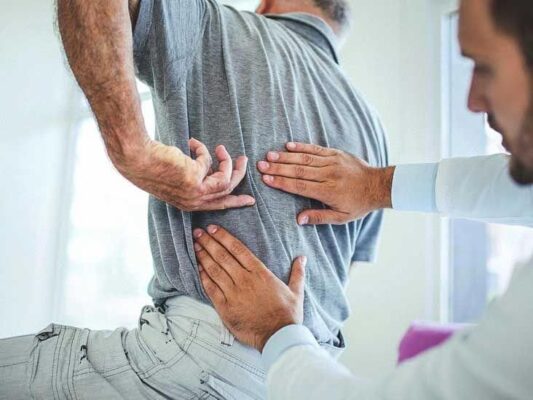
If you’ve been dealing with pain in your lower back, you may have heard someone say, “It’s probably sciatica.” While sciatica is a common cause of back pain, not every ache or discomfort in the lower back is related to the sciatic nerve.
In fact, lower back pain and sciatica are two different conditions, even though they can occur at the same time. Knowing the difference is important because the underlying causes and the most effective treatments can vary significantly.
At ProKinetics Physical Therapy, with locations in Brooklyn (Bensonhurst) and Manhattan (Chelsea), NYC, we help patients identify the true source of their pain and create personalized rehabilitation programs that relieve symptoms, restore mobility, and prevent future injuries.
What Is Lower Back Pain?
Lower back pain is one of the most common musculoskeletal conditions in the world. Nearly everyone experiences it at some point, whether from lifting something heavy, sitting too long at a desk, poor posture, or an injury.
Lower back pain refers to discomfort that is primarily felt in the lumbar spine, the lower portion of your back.
The pain may be:
- Dull or aching
- Sharp during certain movements
- Localized to one area
- Mild or severe
- Temporary or chronic
In many cases, the pain remains confined to the lower back without spreading into the legs.
Common Causes of Lower Back Pain
Lower back pain can develop for many reasons, including:
- Muscle strains
- Ligament sprains
- Poor posture
- Weak core muscles
- Herniated or bulging discs
- Degenerative disc disease
- Osteoarthritis
- Spinal stenosis
- Repetitive lifting
- Prolonged sitting
- Sports injuries
Because several structures can produce pain, a proper evaluation is essential to determine the underlying cause.
What Is Sciatica?
Sciatica is not a condition itself, it’s a collection of symptoms caused by irritation or compression of the sciatic nerve, the largest nerve in the human body.
The sciatic nerve begins in the lower spine and travels through the buttocks, down the back of each leg, and into the feet.
When this nerve becomes compressed or inflamed, pain can travel along its entire pathway.
Unlike typical lower back pain, sciatica often extends beyond the back.
Common Causes of Sciatica
Sciatica is most commonly caused by:
- Herniated discs
- Degenerative disc disease
- Spinal stenosis
- Bone spurs (osteophytes)
- Piriformis syndrome
- Spondylolisthesis
- Traumatic injuries
The most frequent cause is a herniated lumbar disc pressing against a spinal nerve root.
Symptoms of Sciatica
Sciatica usually affects only one side of the body.
Symptoms may include:
- Pain that starts in the lower back or buttock
- Pain traveling down the back of the thigh
- Burning pain
- Electric shock-like sensations
- Tingling (“pins and needles”)
- Numbness
- Weakness in the leg or foot
- Pain that worsens while sitting
Some patients experience mild discomfort, while others describe severe pain that makes walking or standing difficult.
Sciatica vs. Lower Back Pain: The Key Differences
Although they are closely related, several characteristics distinguish the two.
| Lower Back Pain | Sciatica |
|---|---|
| Usually stays in the lower back | Pain radiates down the leg |
| Often caused by muscle or joint problems | Caused by sciatic nerve irritation |
| May affect both sides | Usually affects one side |
| Dull or aching pain | Burning, shooting, or electric pain |
| Rarely causes numbness | Often accompanied by tingling or numbness |
| Muscle soreness is common | Leg weakness may occur |
Understanding these differences can help determine the most appropriate treatment.
Can You Have Both at the Same Time?
Yes.
Many patients experience lower back pain and sciatica simultaneously.
For example, a herniated disc may cause localized pain in the lower back while also compressing a spinal nerve that produces pain down the leg.
This is why treating only the symptoms without identifying the underlying cause often leads to recurring problems.
When Should You See a Physical Therapist?
While occasional back discomfort often improves with rest, persistent symptoms deserve professional attention.
You should consider scheduling an evaluation if:
- Pain lasts more than two weeks
- Symptoms continue to worsen
- Pain travels below the knee
- You experience numbness or tingling
- Walking becomes difficult
- Sitting aggravates your symptoms
- You notice weakness in your leg or foot
- Daily activities become limited
Early intervention frequently leads to faster recovery and may reduce the risk of chronic pain.
How Physical Therapy Can Help
Physical therapy is one of the most effective non-surgical treatments for both lower back pain and sciatica.
At ProKinetics Physical Therapy, we begin with a comprehensive assessment to determine the exact source of your symptoms.
Your therapist will evaluate:
- Posture
- Spinal mobility
- Muscle strength
- Flexibility
- Walking mechanics
- Core stability
- Movement patterns
- Functional limitations
From there, we develop a personalized treatment plan designed specifically for your condition.
Treatment May Include
Manual Therapy
Hands-on techniques improve joint mobility, decrease muscle tension, and reduce pressure on irritated nerves.
Therapeutic Exercise
Targeted strengthening exercises improve spinal support and help prevent future injuries.
Core Stabilization
A strong core reduces stress on the lumbar spine and improves overall movement.
Neural Mobilization
Also called nerve gliding exercises, these movements help improve the mobility of irritated nerves and reduce symptoms of sciatica.
Flexibility Training
Stretching tight muscles—including the hamstrings, hip flexors, and piriformis—can relieve pressure on the lower back and sciatic nerve.
Postural Education
Learning proper lifting mechanics, sitting posture, and workplace ergonomics helps reduce repeated stress on the spine.
Preventing Future Episodes
Although not every episode of back pain can be prevented, healthy habits can significantly reduce your risk.
Consider these tips:
- Stay physically active.
- Strengthen your core muscles.
- Practice good posture.
- Lift heavy objects properly.
- Stretch regularly.
- Avoid sitting for prolonged periods.
- Maintain a healthy weight.
- Follow your home exercise program after rehabilitation.
Small daily habits can make a lasting difference in protecting your spine.
Why Choose ProKinetics Physical Therapy?
At ProKinetics Physical Therapy, we understand that no two patients experience pain in exactly the same way.
Whether you’re dealing with lower back pain, sciatica, a herniated disc, or another spinal condition, our experienced physical therapists provide individualized care focused on treating the root cause not just the symptoms.
Serving patients throughout Brooklyn (Bensonhurst) and Manhattan (Chelsea), our evidence-based approach combines hands-on therapy, targeted exercise, movement education, and personalized rehabilitation to help you recover safely and return to an active lifestyle.
Find the Right Treatment for Your Pain
Living with ongoing back or leg pain can affect your work, sleep, exercise routine, and overall quality of life. The good news is that you don’t have to guess what’s causing your symptoms—or try to manage them on your own.
If you’re experiencing persistent lower back pain, radiating leg pain, numbness, or tingling, the team at ProKinetics Physical Therapy is here to help. Through a thorough evaluation and a customized treatment plan, we’ll help you understand your condition, relieve your pain, and get back to doing the things you love with confidence.
Author: Dr. Hossamalden Albassiouny, DPT OCS
