Have you ever noticed that your body feels strong enough to perform a movement, but something still feels “off”?
Maybe you have trouble controlling a movement after surgery. Perhaps you feel unsteady when changing direction, struggle to coordinate an injured limb, or continue moving differently even though your original injury has improved.
Strength may not be the only issue.
Your brain, nerves, muscles, and joints have to communicate effectively for your body to move with control. When that communication is disrupted by an injury, surgery, pain, neurological condition, or prolonged inactivity, you may need to relearn how to perform certain movements.
This is where neuromuscular re-education can play an important role in physical therapy.
At ProKinetics Physical Therapy, neuromuscular re-education is part of an individualized approach designed to help patients improve movement control, coordination, stability, and functional performance.
What Is Neuromuscular Re-Education?
Neuromuscular re-education is a physical therapy technique used to help improve the communication between the nervous system and muscles.
Every movement you make involves your nervous system sending signals to your muscles. Your muscles then contract in a coordinated way to produce movement. At the same time, sensory information from your joints, muscles, skin, and inner ear helps your brain understand where your body is positioned.
This process happens constantly, often without conscious thought.
After an injury or medical condition, however, movement patterns can change.
Pain may cause you to protect an area. Surgery may temporarily reduce muscle activation. Weakness can affect joint control. A neurological condition can interfere with coordination. Even after the original problem improves, your nervous system may continue relying on an altered movement pattern.
Neuromuscular re-education focuses on helping the body develop more efficient movement strategies.
Why Strength Alone Is Not Always Enough
One common misconception about rehabilitation is that getting stronger automatically means moving better.
Strength is extremely important, but it is only one part of movement.
Imagine two people who can perform a leg press with the same amount of resistance. One person may have excellent control of the knee and hip during functional activities, while the other may struggle to stabilize the leg when stepping, turning, or getting up from a chair.
Their strength may be similar, but their motor control is different.
Physical therapy may therefore address several components at the same time, including:
- Muscle strength
- Joint mobility
- Coordination
- Balance
- Proprioception
- Motor control
- Reaction time
- Functional movement patterns
The objective is not simply to make a muscle stronger. It is to help the body use that strength appropriately during real-life activities.
Who Can Benefit From Neuromuscular Re-Education?
Neuromuscular re-education can be useful for a wide range of patients.
People Recovering From Surgery
Following orthopedic surgery, muscles surrounding the affected area may become weak or difficult to activate.
For example, after certain knee procedures, a patient may have difficulty properly engaging the quadriceps. Rehabilitation may combine strengthening with controlled movement exercises to help restore appropriate muscle recruitment and coordination.
Patients Recovering From an Injury
An injury can change the way you move.
Experiencing similar pain?
Our licensed physical therapists can evaluate your condition and build a custom recovery plan.
Book BensonhurstBook ChelseaYou may begin avoiding certain positions or shifting your weight away from the affected side. While these adaptations can be useful initially, they may become inefficient if they continue long after the tissue has recovered.
Neuromuscular training can help patients gradually regain control of movements that were previously uncomfortable or difficult.
Athletes Returning to Activity
Sports require rapid, coordinated movements.
Running, jumping, cutting, landing, throwing, and changing direction all require the nervous system and muscles to work together efficiently.
Neuromuscular training can help athletes develop better movement control as they progress toward their previous level of activity.
People With Balance or Coordination Difficulties
Balance depends on communication between multiple systems within the body.
The brain receives information about body position and movement and then coordinates an appropriate response. Physical therapy can incorporate controlled activities that challenge these systems in a progressive and safe manner.
Patients With Neurological Conditions
Certain neurological conditions can affect muscle control, coordination, gait, balance, and functional movement.
A physical therapist can determine whether neuromuscular re-education is appropriate and incorporate exercises based on the individual’s abilities, goals, and functional limitations.
What Does Neuromuscular Re-Education Look Like?
There is no single exercise that represents neuromuscular re-education.
The techniques used depend on the person’s condition and goals.
A physical therapist may use activities such as controlled weight shifting, balance exercises, coordination drills, movement-pattern training, proprioceptive activities, reaching tasks, stepping exercises, or functional movements.
For some patients, the exercises may look simple.
That does not mean they are ineffective.
A basic movement performed slowly and with precise control can challenge the nervous system in a very different way than simply lifting a heavy weight.
The therapist may also provide verbal, visual, or hands-on feedback to help the patient understand how to perform the movement correctly.
Proprioception: Your Body’s Internal Positioning System
An important component of neuromuscular control is proprioception.
Proprioception refers to your body’s ability to sense its position and movement without having to look at every part of your body.
It helps you know where your foot is when walking, how much your knee is bending, and where your arm is positioned when reaching for something.
You use proprioception constantly.
It is one reason you can walk without staring at your feet or touch your nose with your eyes closed.
Injury, swelling, immobilization, or surgery can affect this system. Rehabilitation may therefore include exercises that challenge body awareness and joint control.
How Neuromuscular Training Applies to Everyday Life
One of the most valuable aspects of neuromuscular re-education is its connection to functional movement.
The goal of rehabilitation is rarely to become better at performing an exercise simply for the sake of doing the exercise.
The bigger goal is to improve your ability to function outside the clinic.
That could mean:
Getting out of a chair more comfortably.
Walking across a busy street with greater confidence.
Reaching into a cabinet without losing your balance.
Going up and down stairs.
Returning to recreational activities.
Lifting and carrying objects safely.
Changing direction while playing a sport.
Moving around your home with greater control.
Good rehabilitation connects exercises to the activities you actually need and want to perform.
Why Individualized Treatment Matters
Neuromuscular problems can look very different from one person to another.
Two patients may have the same diagnosis but completely different movement limitations. One may have significant weakness. Another may have adequate strength but poor coordination. A third may have limited mobility that prevents normal movement.
That is why treatment should not be based solely on a diagnosis.
At ProKinetics Physical Therapy, our therapists evaluate how each patient moves and determine which factors may be limiting function. Treatment can then be adjusted as the patient’s abilities improve.
This individualized approach allows rehabilitation to progress from basic control toward more demanding functional activities.
When Should You Consider Physical Therapy?
You may benefit from a physical therapy evaluation if you notice:
Persistent difficulty controlling a movement.
Weakness following an injury or surgery.
Changes in coordination.
Difficulty with balance.
Reduced confidence during movement.
Trouble returning to sports or physical activities.
Compensating with another part of your body.
Difficulty performing everyday tasks that used to feel easy.
You do not necessarily need severe pain to seek help. Changes in movement, strength, coordination, or function can also be reasons to speak with a physical therapist.
Helping Your Body Move With Greater Control
Rehabilitation is about more than strengthening muscles.
Your body needs to know when, where, and how to use that strength.
Neuromuscular re-education helps address this important part of recovery by focusing on communication between the nervous system and the muscles. With appropriate exercises, repetition, feedback, and progression, patients can work toward more controlled and efficient movement.
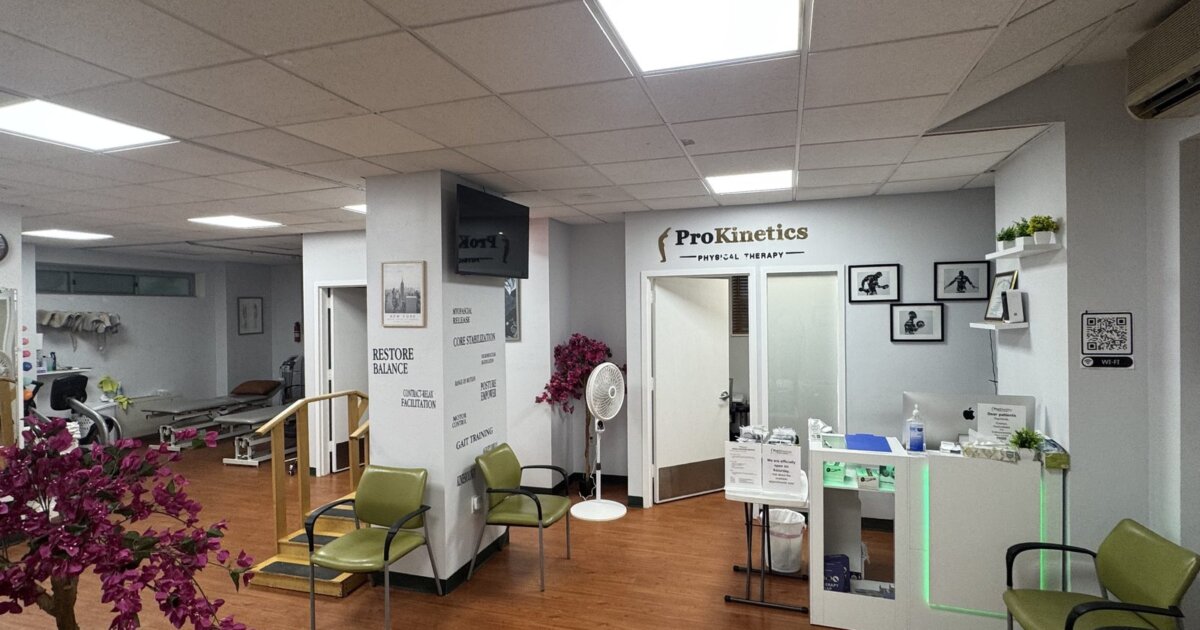
At ProKinetics Physical Therapy, we provide individualized rehabilitation for patients throughout Bensonhurst, Brooklyn and Chelsea, Manhattan. Our goal is to help you regain physical function, improve movement quality, and return to the activities that matter most to you.
Whether you are recovering from surgery, returning to activity after an injury, dealing with weakness or coordination difficulties, or simply struggling with movement that no longer feels natural, a personalized physical therapy evaluation can help identify where you need support.
Better movement starts with understanding how your body moves.
ProKinetics Physical Therapy
Bensonhurst, Brooklyn Location:
7819 Bay Parkway, Brooklyn, NY 11214
Phone: (718) 576-1150
Chelsea, Manhattan Location:
359 W 23rd St, New York, NY 10011
Phone: (718) 223-4299
Serving patients in Bensonhurst, Brooklyn and Chelsea, Manhattan, NYC.
Author: Dr. Hossamalden Albassiouny, DPT OCS
Ready to get back to what you love?
Take the first step toward lasting relief with personalized physical therapy in Bensonhurst & Chelsea.
Book BensonhurstBook Chelsea