
You do not have to be out of shape to feel unusually tired during physical activity.
Maybe your legs feel heavy after walking for a few blocks. Perhaps your muscles begin burning halfway through a workout, or you notice that everyday tasks become harder when you have been active for a while. You may even have enough strength to perform an exercise once or twice but struggle to repeat it.
These experiences can have several possible explanations.
One factor that is often overlooked is muscular endurance.
Strength and endurance are related, but they are not the same thing. Your muscles may be capable of producing force without being able to sustain activity for an extended period.
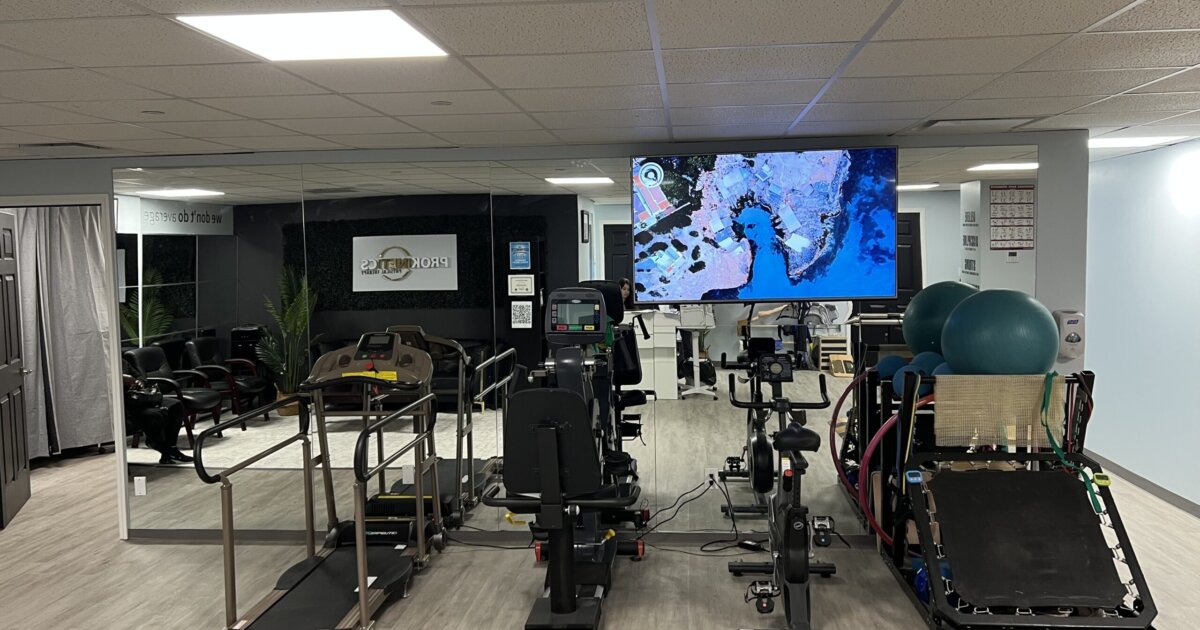
Physical therapy can help identify limitations in strength, endurance, movement efficiency, and conditioning and create a gradual program to improve physical capacity.
At ProKinetics Physical Therapy, our individualized approach focuses on helping patients build the physical abilities they need for everyday life, exercise, work, and other meaningful activities.
What Is Muscular Endurance?
Muscular endurance is the ability of a muscle or group of muscles to sustain repeated contractions or maintain activity over time.
Consider the difference between lifting a moderately heavy object once and carrying a lighter object across a room several times.
The first task places greater emphasis on strength.
The second requires the muscles to continue working without becoming excessively fatigued.
Both abilities matter.
Good muscular endurance can help you tolerate activities such as walking, climbing stairs, standing, lifting, carrying, exercising, and performing repetitive tasks.
Strength Does Not Automatically Mean Endurance
Someone can be relatively strong and still have poor endurance.
For example, you might be able to perform several strong repetitions of a particular exercise but become fatigued quickly during a longer activity.
This can happen because the body uses different physiological and neuromuscular strategies for short, powerful efforts compared with sustained activity.
Rehabilitation therefore needs to match the demands of the activity.
If your goal is to walk farther, your program may need to gradually increase walking tolerance.
If you need to stand throughout your workday, your rehabilitation may need to address prolonged weight-bearing and postural endurance.
If you want to return to sports, your body may need to tolerate repeated movements over a longer period.
Why Does Muscular Endurance Decline?
Reduced endurance can develop for many reasons.
Inactivity
When physical activity decreases, the muscles and cardiovascular system receive less training.
This can happen after an injury, surgery, illness, extended rest, or a major change in lifestyle.
Even a relatively short period of inactivity can make previously familiar activities feel more demanding.
Pain
Pain can change the way you move.
You may unconsciously avoid using a painful area or reduce how much activity you perform. Over time, reduced use can contribute to weakness and reduced conditioning.
Recovery After Surgery
Surgery often requires a period of restricted activity.
As your body heals, certain muscles may not be used at their previous level. Rehabilitation can help gradually restore strength and endurance while respecting the healing process.
Experiencing similar pain?
Our licensed physical therapists can evaluate your condition and build a custom recovery plan.
Book BensonhurstBook ChelseaChronic Conditions
Some health conditions can affect physical activity tolerance, muscle performance, or energy levels.
A physical therapist can help determine whether a structured rehabilitation program is appropriate and work within any medical restrictions established by your healthcare team.
Repetitive or Physically Demanding Work
Endurance problems are not limited to exercise.
Someone may become fatigued from repeatedly lifting, reaching, bending, standing, or walking during a workday.
The issue may not be that one movement is too difficult. The challenge may be performing it repeatedly for hours.
What Does Poor Muscular Endurance Look Like?
Reduced endurance can appear in subtle ways.
You may notice that:
You become tired sooner than expected during exercise.
Your muscles feel heavy during prolonged activity.
You need frequent breaks during tasks that used to feel manageable.
Your posture becomes harder to maintain as you get tired.
Your movements become less controlled toward the end of an activity.
You struggle to complete several repetitions of a movement.
Stairs become increasingly difficult after a busy day.
Walking longer distances leaves you unusually fatigued.
You feel physically exhausted after routine household tasks.
These signs do not automatically mean that poor muscular endurance is the cause. Fatigue can have many explanations, including medical conditions, sleep problems, nutritional issues, medication effects, and other factors.
Persistent or unexplained fatigue should be discussed with an appropriate healthcare professional.
How Physical Therapy Evaluates Endurance
A physical therapist does not have to guess whether endurance is limiting your function.
During an evaluation, the therapist may consider your strength, movement quality, activity tolerance, balance, cardiovascular response to exercise, functional abilities, and the specific activities that are difficult for you.
The evaluation should also take your goals into account.
Someone who wants to return to running will have different endurance requirements from someone who wants to walk around a neighborhood comfortably or stand through a work shift.
This is one reason individualized physical therapy can be so useful.
How Physical Therapy Can Build Endurance
Improving endurance generally requires progressive exposure to physical activity.
The body adapts when it is given an appropriate challenge consistently over time.
A physical therapist may use several approaches.
Repeated Functional Movements
Exercises such as sit-to-stands, step-ups, controlled squats, and other functional movements can help improve tolerance for activities used in daily life.
Resistance Training
Strengthening exercises can improve the muscles’ ability to perform repeated tasks.
Resistance may be adjusted based on your current ability and gradually progressed as your capacity improves.
Cardiovascular Conditioning
Depending on the individual’s needs and medical status, activities such as walking, stationary cycling, or other appropriate forms of aerobic exercise may be incorporated into rehabilitation.
The objective is to gradually improve your ability to sustain activity.
Activity Progression
Doing too much too quickly can leave you excessively fatigued or aggravate symptoms.
A therapist can help establish an appropriate progression by adjusting factors such as duration, repetitions, resistance, rest periods, and exercise complexity.
Movement Efficiency
Endurance is not only about working harder.
It is also about moving efficiently.
If you use unnecessary energy because of poor mechanics, weakness, limited mobility, or inefficient movement patterns, an activity may feel more exhausting than it should.
Physical therapy can address contributing movement limitations so your body can perform tasks more effectively.
Why Rest Periods Matter
Building endurance does not mean eliminating rest.
Recovery is part of training.
Rest periods allow your muscles and cardiovascular system to recover before the next activity. As your conditioning improves, the amount of activity you can tolerate may increase while the amount of rest you need decreases.
The appropriate balance depends on your condition and goals.
A physical therapist can help determine how much activity is appropriate at each stage of rehabilitation.
Endurance Matters Outside the Gym
You do not need to be an athlete to benefit from better endurance.
Think about a normal day.
You wake up, get dressed, prepare breakfast, commute, work, walk through a store, climb stairs, prepare dinner, complete household tasks, and perhaps take a walk or exercise.
Each activity requires some combination of muscular strength, cardiovascular fitness, coordination, mobility, and endurance.
When your physical capacity improves, ordinary tasks may become less demanding.
This can have an important effect on your independence and confidence.
Endurance Training Should Match Your Goals
A common mistake is assuming that everyone should follow the same exercise routine.
Your rehabilitation should reflect what you actually need to do.
For example, someone preparing to return to a physically demanding job may need progressive lifting and carrying activities.
A recreational walker may benefit from gradually increasing walking duration.
An athlete may need repeated high-intensity movements with appropriate recovery periods.
Someone recovering from surgery may need a slower progression focused on rebuilding basic activity tolerance.
The best program is not necessarily the hardest program.
It is the program that provides the appropriate challenge for your current stage of recovery.
When Should You Consider Physical Therapy?
Consider speaking with a physical therapist if reduced physical endurance is interfering with activities you previously handled comfortably.
An evaluation may be helpful if you are experiencing:
Reduced tolerance for walking or standing.
Difficulty returning to exercise after an injury.
Weakness following surgery.
Repeated fatigue during physical tasks.
Difficulty completing work-related activities.
Loss of conditioning after prolonged inactivity.
Reduced ability to perform household or recreational activities.
A noticeable decline in physical function.
Physical therapy can help determine which areas may be limiting your performance and whether a structured rehabilitation program could help.
Build Your Capacity Gradually
Improving endurance is a process.
You may not notice a dramatic difference after one workout or one therapy session. Progress often comes from consistently challenging the body at an appropriate level and allowing enough recovery between activities.
Over time, small improvements can add up.
You may walk a little farther, perform more repetitions, stand longer, recover more quickly, or complete everyday tasks with less effort.
Those changes represent meaningful progress.
At ProKinetics Physical Therapy, we help patients in Bensonhurst, Brooklyn and Chelsea, Manhattan work toward improved strength, conditioning, movement, and physical function.
Whether you are recovering from an injury, rebuilding your activity level after surgery, dealing with reduced conditioning, or trying to return to an active lifestyle, rehabilitation can be tailored to your needs and goals.
You do not have to accept feeling exhausted every time you become physically active.
Understanding your limitations is the first step toward building the capacity to do more.
ProKinetics Physical Therapy
Bensonhurst, Brooklyn Location:
7819 Bay Parkway, Brooklyn, NY 11214
Phone: (718) 576-1150
Chelsea, Manhattan Location:
359 W 23rd St, New York, NY 10011
Phone: (718) 223-4299
Serving patients in Bensonhurst, Brooklyn and Chelsea, Manhattan, NYC.
Ready to get back to what you love?
Take the first step toward lasting relief with personalized physical therapy in Bensonhurst & Chelsea.
Book BensonhurstBook Chelsea